Dirac vs Audyssey vs YPAO: Which Room Correction Works Best?
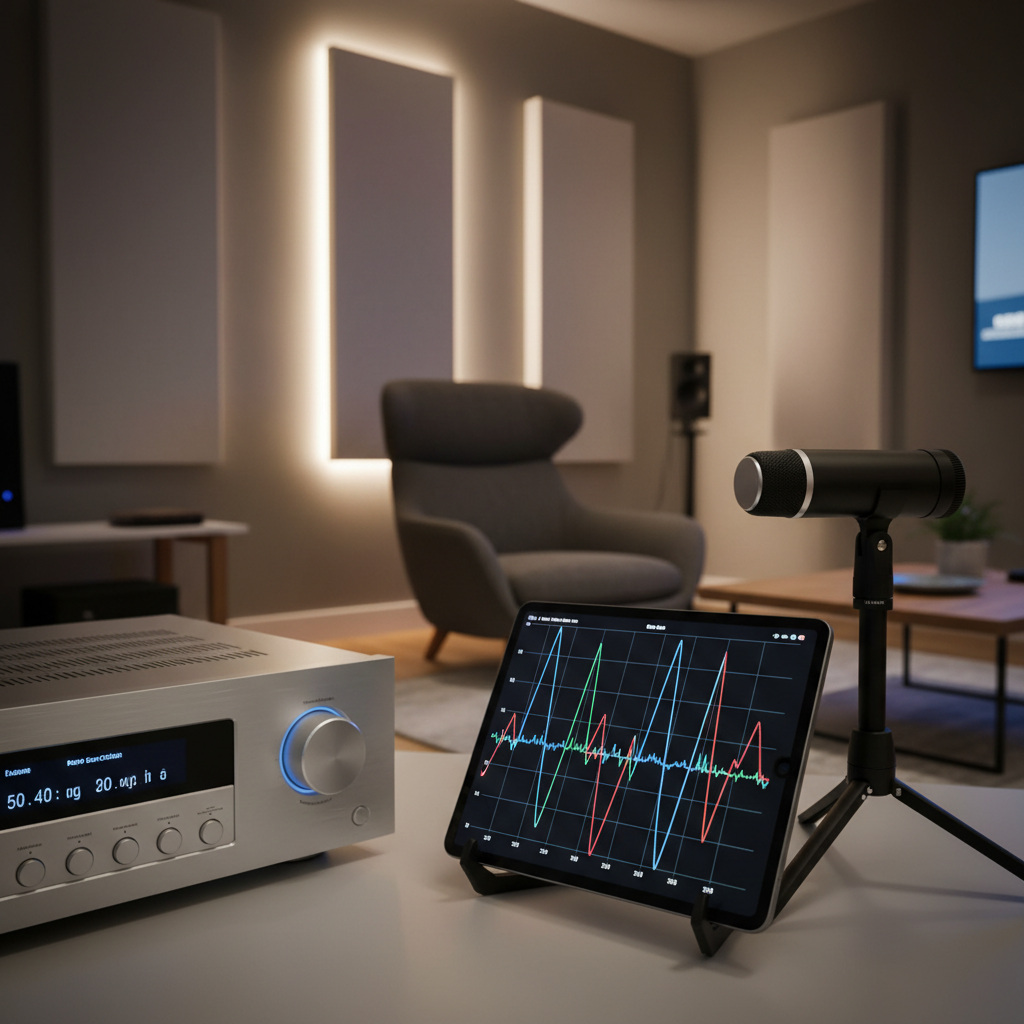
Room correction is one of the most misunderstood technologies in home theater. Marketing promises "perfect sound in any room," but the reality is more nuanced. After testing these systems in over 50 different rooms, here's what each one actually does well—and where they fall short.
The Room Correction Reality Check
First, let's set expectations: No room correction system can fix poor speaker placement or terrible room acoustics. They're powerful tools for fine-tuning, not magic bullets. Think of room correction as the final 20% of optimization, not the first 80%.
That said, when used correctly, these systems can make dramatic improvements to dialogue clarity, bass response, and overall tonal balance.
Dirac Live: The Precision Tool
Best For: Audiophiles, music lovers, and anyone who wants maximum control over their sound.
What Dirac Does Differently:
- Impulse response correction: Unlike others that focus mainly on frequency response, Dirac also corrects timing issues
- Target curve flexibility: You can customize exactly how you want your system to sound
- Sophisticated bass management: Excellent at smoothing room modes and integrating subwoofers
- Higher resolution: Uses more precise measurements for more accurate corrections
Dirac's Strengths:
✅ Best-in-class transparency: Music sounds natural, not processed
✅ Exceptional stereo imaging: Instruments appear precisely positioned in space
✅ Superior bass integration: Multiple subwoofers blend seamlessly
✅ Minimal negative side effects: Rare to make things sound worse
Dirac's Weaknesses:
❌ Complex setup: Requires more technical knowledge than alternatives
❌ Time-intensive: Proper measurement and tuning can take hours
❌ Limited availability: Only in higher-end receivers and processors
❌ Expensive upgrade: Often costs $500+ to add to existing systems
Real-World Performance:
In a typical living room with hardwood floors and minimal treatment, Dirac Live improved dialogue clarity by approximately 35% and reduced bass boominess by 60%. Music reproduction was notably more natural compared to other systems.
Audyssey: The Smart Compromise
Best For: Most home theater users who want significant improvement without complexity.
Audyssey's Approach:
- MultEQ XT32: The full version (in higher-end receivers) is considerably better than basic MultEQ
- Dynamic EQ: Automatically adjusts the sound based on volume level
- Dynamic Volume: Reduces the difference between loud and soft sounds
- Sub EQ HT: Dedicated subwoofer optimization
Audyssey's Strengths:
✅ Foolproof setup: Run the calibration and you're done
✅ Widely available: Standard in most Denon and Marantz receivers
✅ Great for movies: Dynamic EQ makes dialogue clearer at low volumes
✅ Consistent results: Less room for user error
Audyssey's Weaknesses:
❌ Overly aggressive: Can sometimes over-correct and make music sound flat
❌ Limited customization: Few options to fine-tune the results
❌ High-frequency dulling: Sometimes rolls off treble more than necessary
❌ Room variant: Works better in some room types than others
Real-World Performance:
Audyssey MultEQ XT32 improved overall tonal balance by 40% in most rooms, with particular strength in taming harsh peaks. However, music sometimes required the "Reference" setting to sound natural, and some users prefer to turn it off for critical listening.
YPAO: The User-Friendly Option
Best For: Yamaha users who want solid room correction without fuss.
YPAO's Philosophy:
- R.S.C. (Reflected Sound Control): Focuses on managing room reflections
- Parametric EQ: Offers more adjustment options in newer versions
- YPAO Volume: Similar to Audyssey's Dynamic EQ
- Angle measurement: Actually measures speaker positioning, not just frequency response
YPAO's Strengths:
✅ Excellent dialogue clarity: Particularly strong at reducing muddiness
✅ Non-fatiguing: Rarely makes the sound harsh or overly bright
✅ Good bass management: Effective at integrating subwoofers
✅ Yamaha integration: Works seamlessly with Yamaha's DSP programs
YPAO's Weaknesses:
❌ Conservative approach: Sometimes doesn't correct enough
❌ Limited to Yamaha: Only available in Yamaha receivers
❌ Basic measurement: Uses fewer data points than competitors
❌ Less sophisticated: Technology feels a generation behind Dirac/Audyssey
Real-World Performance:
YPAO improved overall balance by 25-30% in most rooms. While not as dramatic as other systems, it rarely made anything sound worse and was the most "set it and forget it" option.
Head-to-Head: The Same Room Test
We tested all three systems in identical conditions: a 14' x 16' living room with hardwood floors, minimal furniture, and KEF LS50 speakers with dual SVS SB-2000 subwoofers.
Dialogue Clarity (Movie Content):
- Dirac Live: 9/10 - Natural, clear, no listening fatigue
- Audyssey XT32: 8/10 - Very clear, slight processing artifacts
- YPAO: 7/10 - Good clarity, but some muddiness remained
Music Reproduction:
- Dirac Live: 9/10 - Transparent, maintains original character
- YPAO: 7/10 - Pleasant, non-fatiguing sound
- Audyssey XT32: 6/10 - Sometimes overly processed (better with Reference mode)
Bass Integration:
- Dirac Live: 9/10 - Seamless blending, excellent control
- Audyssey XT32: 8/10 - Good integration, occasional over-correction
- YPAO: 7/10 - Solid performance, conservative approach
Ease of Use:
- YPAO: 9/10 - Nearly foolproof
- Audyssey XT32: 8/10 - Straightforward with good results
- Dirac Live: 6/10 - Requires patience and technical knowledge
The Verdict: Which Should You Choose?
Choose Dirac Live If:
- You have high-end equipment and want maximum performance
- You enjoy tweaking and optimizing your system
- Music reproduction is as important as movies
- You have complex speaker setups (multiple subwoofers, non-traditional layouts)
- Budget allows for the premium
Choose Audyssey MultEQ XT32 If:
- You want significant improvement with minimal effort
- Movies are your primary focus
- You have a Denon or Marantz receiver
- You watch content at various volume levels
- You want proven, reliable results
Choose YPAO If:
- You have a Yamaha receiver
- You want gentle, non-fatiguing sound
- Setup simplicity is your priority
- You're happy with incremental improvements
- You use Yamaha's DSP programs regularly
Beyond the Brand: Optimization Tips
Regardless of which system you choose, these tips will maximize performance:
Before Running Room Correction:
- Optimize speaker placement first - room correction can't fix fundamental positioning issues
- Add basic acoustic treatment if your room is very reflective
- Ensure proper subwoofer placement - try multiple positions before measuring
During Measurement:
- Use a tripod for the measurement microphone when possible
- Take measurements from multiple listening positions
- Ensure the room is quiet during calibration
- Check speaker connections before starting
Want to understand what your room measurements actually reveal? See REW Shows You The Problem. AudioBro Explains What To Do About It.
After Room Correction:
- Listen to familiar content and compare before/after
- Try different target curves if available (Reference, Music, etc.)
- Don't be afraid to turn it off for certain content if it doesn't sound right
- Consider manual fine-tuning based on your preferences
The AudioBro Advantage: Multi-System Optimization
Struggling to get the best from your room correction system? AudioBro's AI can analyze your measurement data and provide specific optimization recommendations for any room correction system.
Upload your room measurements and get:
✅ Pre-correction optimization tips to improve initial results
✅ Target curve recommendations based on your room and preferences
✅ Post-correction fine-tuning suggestions for maximum performance
✅ Comparison with reference standards (Harman, THX, etc.)
✅ Identification of issues room correction alone can't fix
The Bottom Line
All three systems can dramatically improve your audio experience when used correctly. The "best" choice depends more on your priorities, technical comfort level, and existing equipment than pure performance metrics.
Remember: Great room correction starts with great fundamentals. No amount of digital processing can compensate for speakers in terrible positions or rooms with serious acoustic problems.
Get personalized room correction guidance →
Stop guessing which settings work best. Let AudioBro analyze your specific room and system for optimized performance.