How Guided Placement Unlocked a Reference Electrostatic System
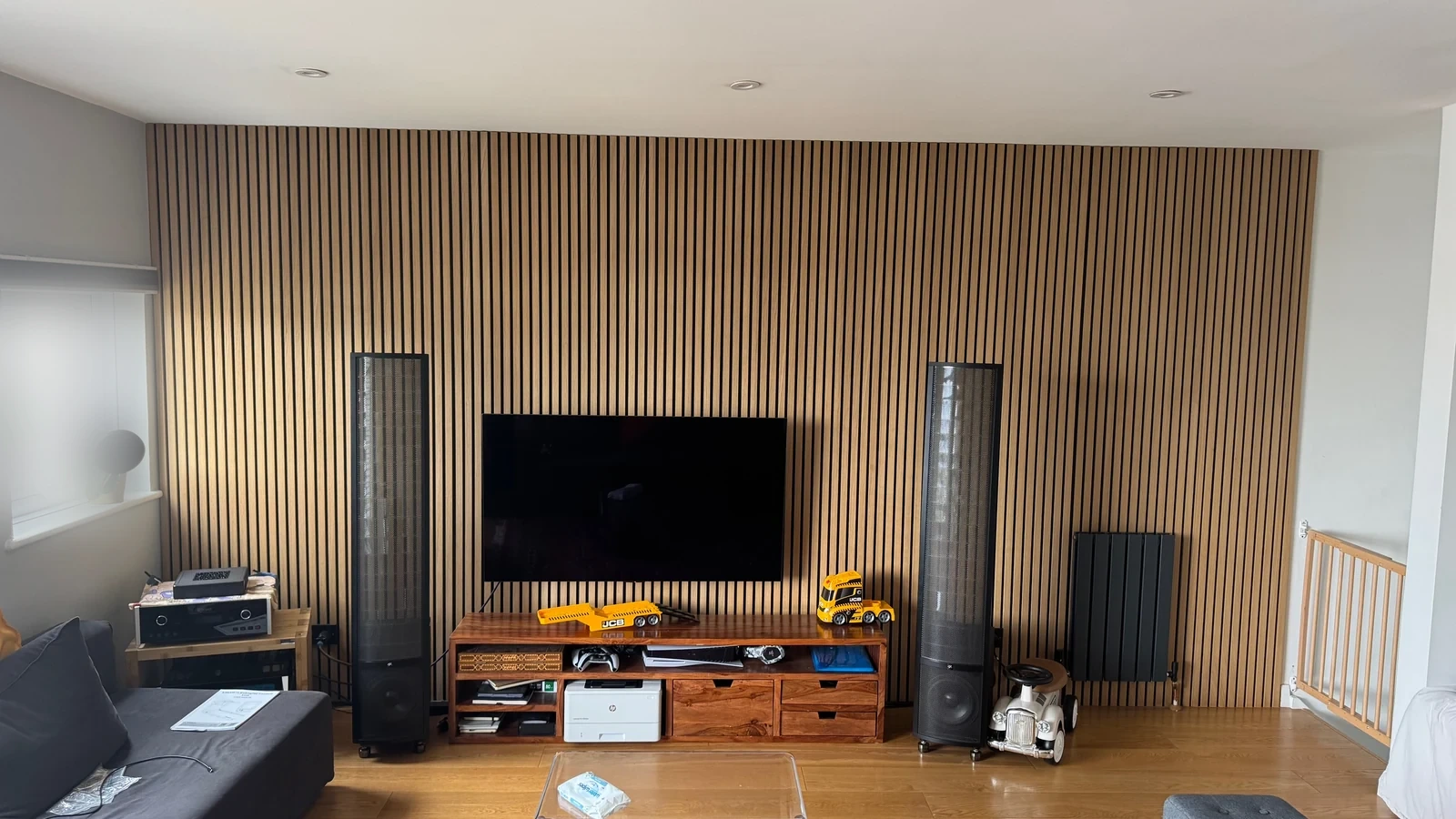
A passionate music listener with a constrained apartment listening room had assembled MartinLogan electrostatic loudspeakers and premium amplification. The listener reported loose bass, reduced focus and a lack of continuity between the lower midrange and bass.
The System and The Challenge
Context: A passionate music listener with a constrained apartment listening room
System: MartinLogan electrostatic loudspeakers and premium amplification
Symptoms: The listener reported loose bass, reduced focus and a lack of continuity between the lower midrange and bass.
Room Constraints
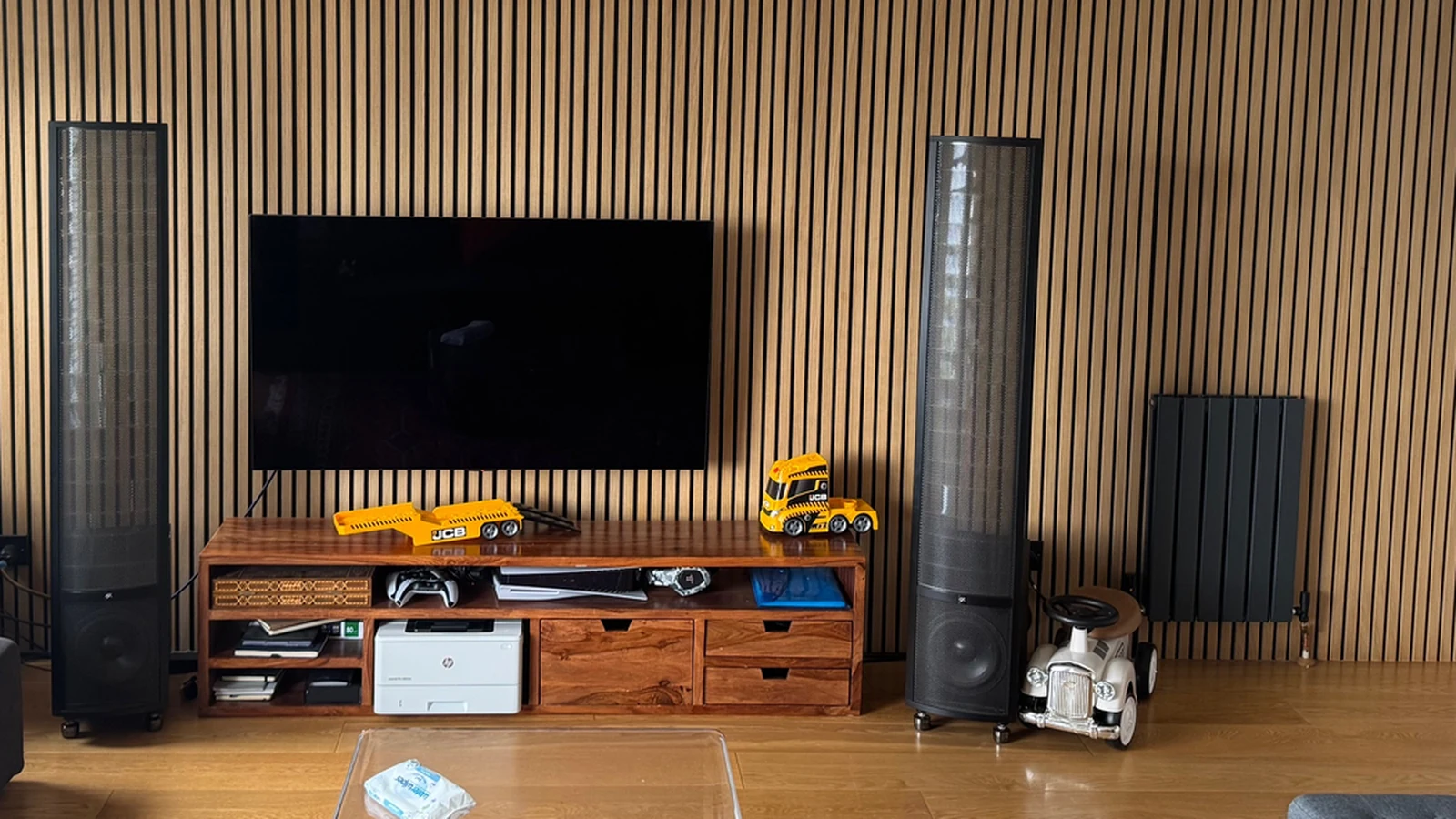
- Loudspeakers positioned close to the front wall
- Very different left and right boundary conditions
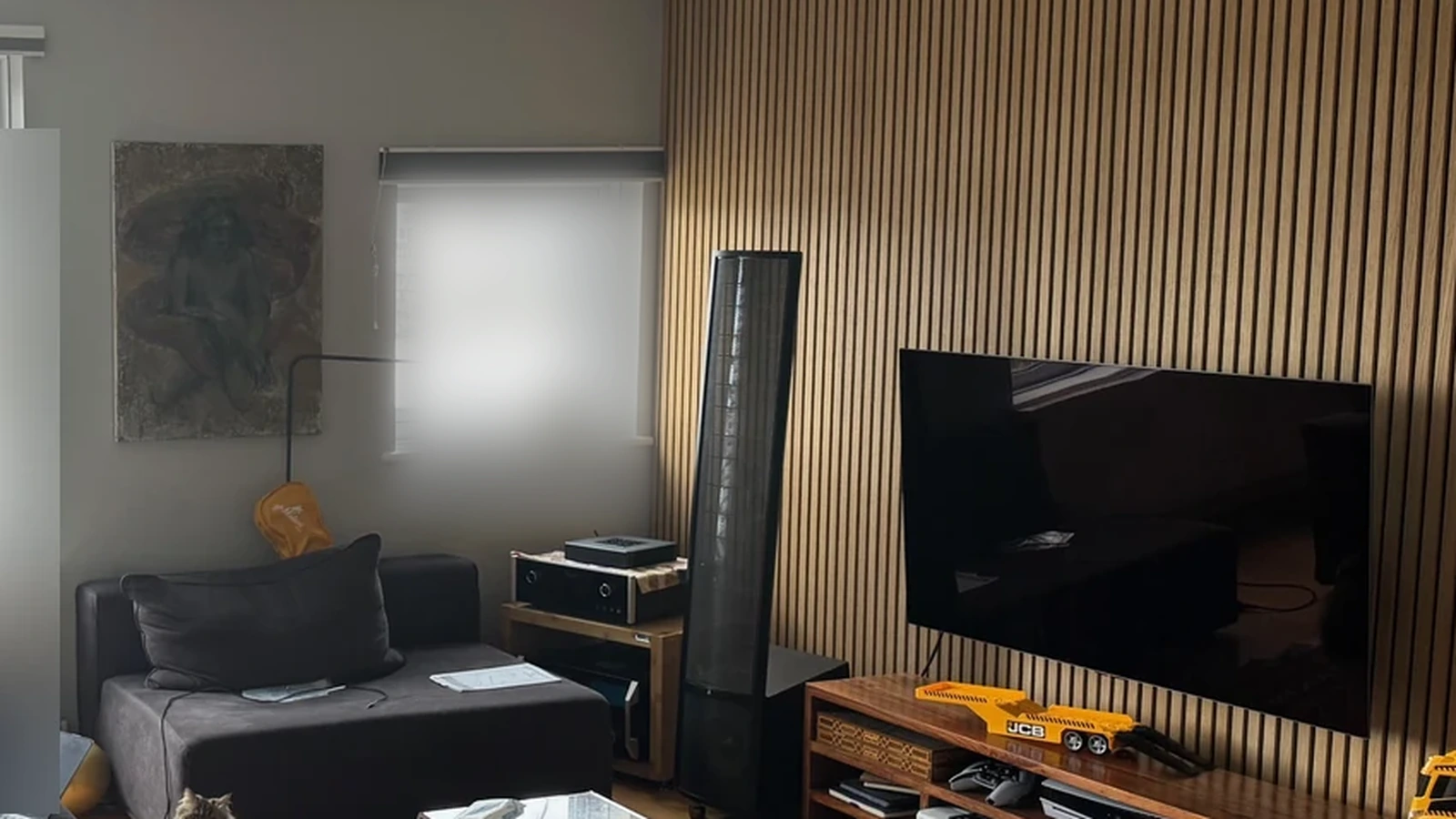
- Extensive glazing near the likely left reflection area
- Hardwood flooring and a glass coffee table
- A relatively small rug
- A low ceiling
- An open-plan kitchen and living area
- Domestic and aesthetic requirements that ruled out studio-style treatment
The Starting Point
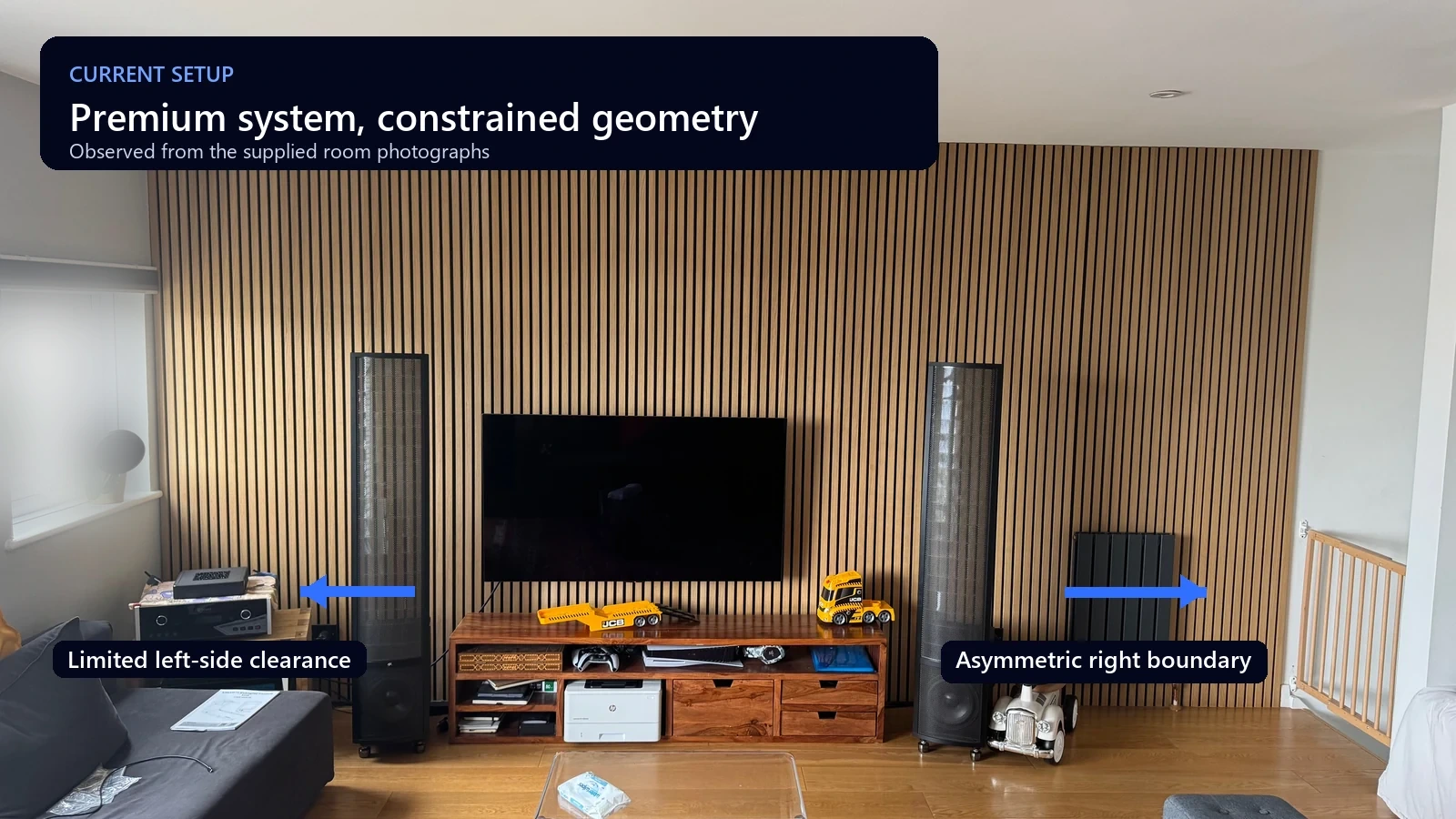
The existing timber-slat front wall was a valuable starting point, and the open-plan rear area avoided the behaviour of a conventional hard rear wall. However, the electrostatic panels had limited room to breathe and the listening geometry was not yet giving them the most stable operating window.
Investigation & Modelling
AudioBro prioritised geometry before recommending more treatment. Electrostatic loudspeakers are particularly sensitive to spacing, toe-in and listening distance. Small geometric errors can significantly affect centre focus, stage width and tonal continuity.
Room modelling suggested possible low-frequency activity near 23 Hz, 47 Hz and 87 Hz.
Modelled—not measured.
Implemented Placement Change
Across multiple consultations totalling more than three hours, AudioBro guided the customer through a controlled physical optimisation sequence that was implemented live.
- Move both loudspeakers approximately 20 cm farther into the room
- Increase loudspeaker spacing where practical
- Improve clearance at the more constrained side boundary
- Use approximately 25° toe-in as a starting reference
- Move the listening position forward by approximately 50–60 cm
- Compare one change at a time using the same tracks and playback level
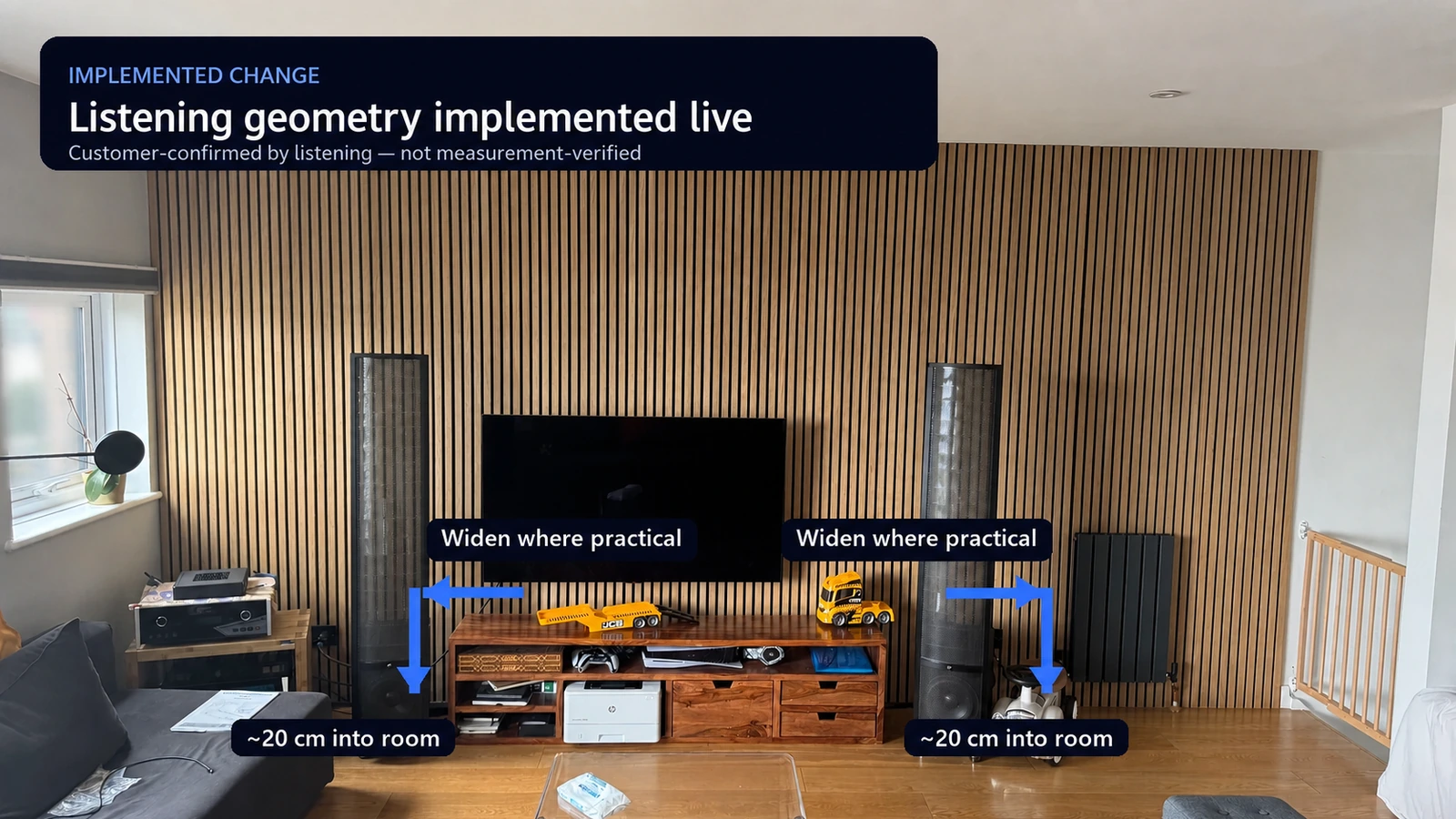
Using familiar reference tracks, the customer reported a dramatic, immediately audible improvement in clarity, focus and overall musical presentation.
Implemented and customer-confirmed by listening. Not measurement-verified.
Future Treatment Plan
- Discreet broadband treatment integrated with artwork near the usable left reflection area
- A substantially larger, thicker rug between the system and listening position
- Selected artwork-based treatment toward the rear only where justified
- Possible hybrid absorption-diffusion treatment high toward the rear ceiling area after verification
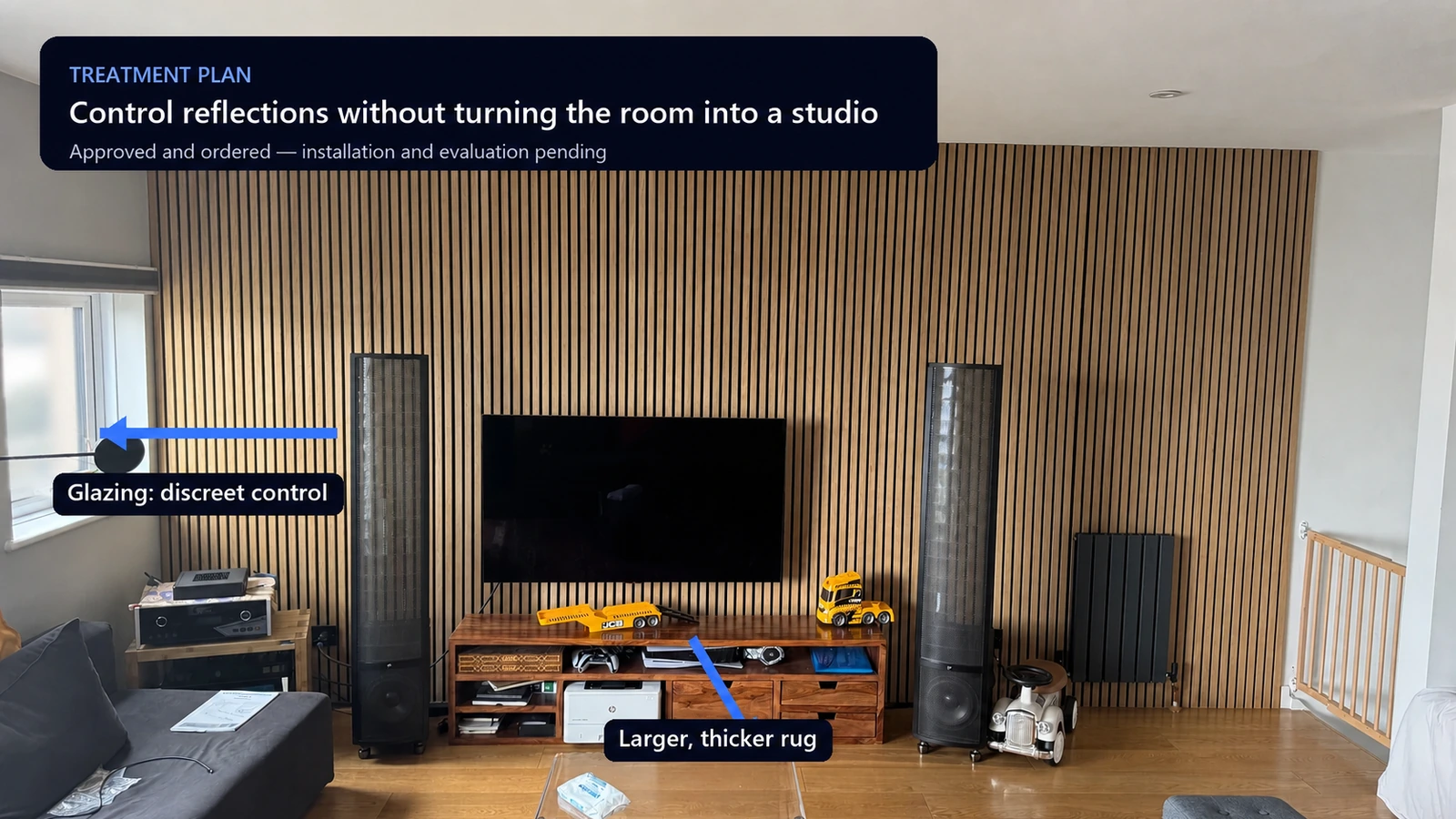
The customer approved, paid for and ordered the recommended treatment. Delivery, installation photographs and final listening evaluation are pending.
Treatment approved, paid for and ordered. Installation and evaluation pending.
Verification Pending
The customer has access to an omnidirectional measurement microphone. The next evidence stage is a controlled REW session capturing left, right and combined sweeps, followed by frequency-response, decay and timing review. Only a controlled measurement and matched retest can establish how the implemented placement changes affected the measured response. Listening confirmation is a real customer outcome, but it is not a substitute for calibrated evidence.
Why This Case Matters
An exceptional system operating inside a home with glazing, asymmetry, shared furniture and aesthetic constraints was materially improved through guided placement before additional equipment or DSP was considered. The consultation began by identifying the room and geometry as the first bottleneck, implementing the physical changes live and confirming the audible result with familiar music. Treatment and measurement remain clearly separated as the next evidence stages. That is the AudioBro approach: get more of the sound already available from the system before spending money on the next component.
Want AudioBro to review it for you?
If your system should sound better than it does and you want room-first guidance before spending more on equipment, AudioBro can review your room.