
How Room-First Placement Improved Focus in an Open-Plan Marten System
Customer-confirmed by listening · Supporting REW evidence · Matched verification pending
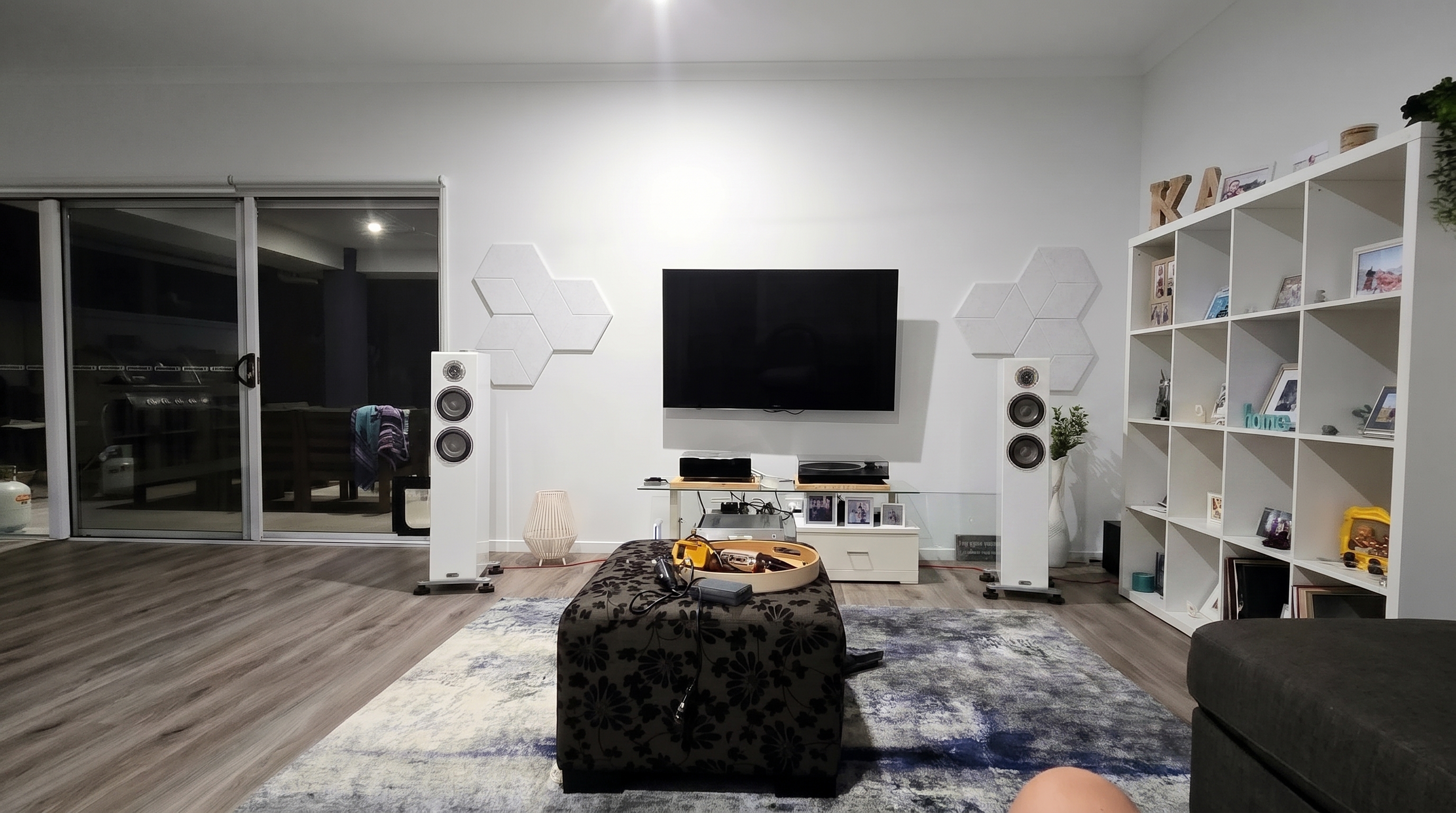
A dedicated listener in a large, asymmetric open-plan room had assembled premium Marten loudspeakers and partnering amplification. Despite the quality of the equipment, the system was not delivering the midrange focus, vocal clarity or image stability the loudspeakers were capable of. High-frequency energy sounded glaring, bass behaviour was inconsistent, and the overall presentation felt below what the system should offer.
The System and The Challenge
Context: A dedicated listener in a large, asymmetric open-plan room
System: premium Marten loudspeakers and partnering amplification
Symptoms: Despite the quality of the equipment, the system was not delivering the midrange focus, vocal clarity or image stability the loudspeakers were capable of. High-frequency energy sounded glaring, bass behaviour was inconsistent, and the overall presentation felt below what the system should offer.
Room Constraints
- Room measured approximately 7.8 × 7.7 metres
- Left side opened into adjoining areas with no equivalent first-reflection wall
- Right loudspeaker operated closer to shelving and a reflective boundary
- Large glass surfaces, reflective flooring and limited soft coverage
- Visually symmetrical loudspeaker placement did not create acoustically symmetrical conditions
- Listening distance was longer than the loudspeaker spacing, weakening centre focus
The Starting Point
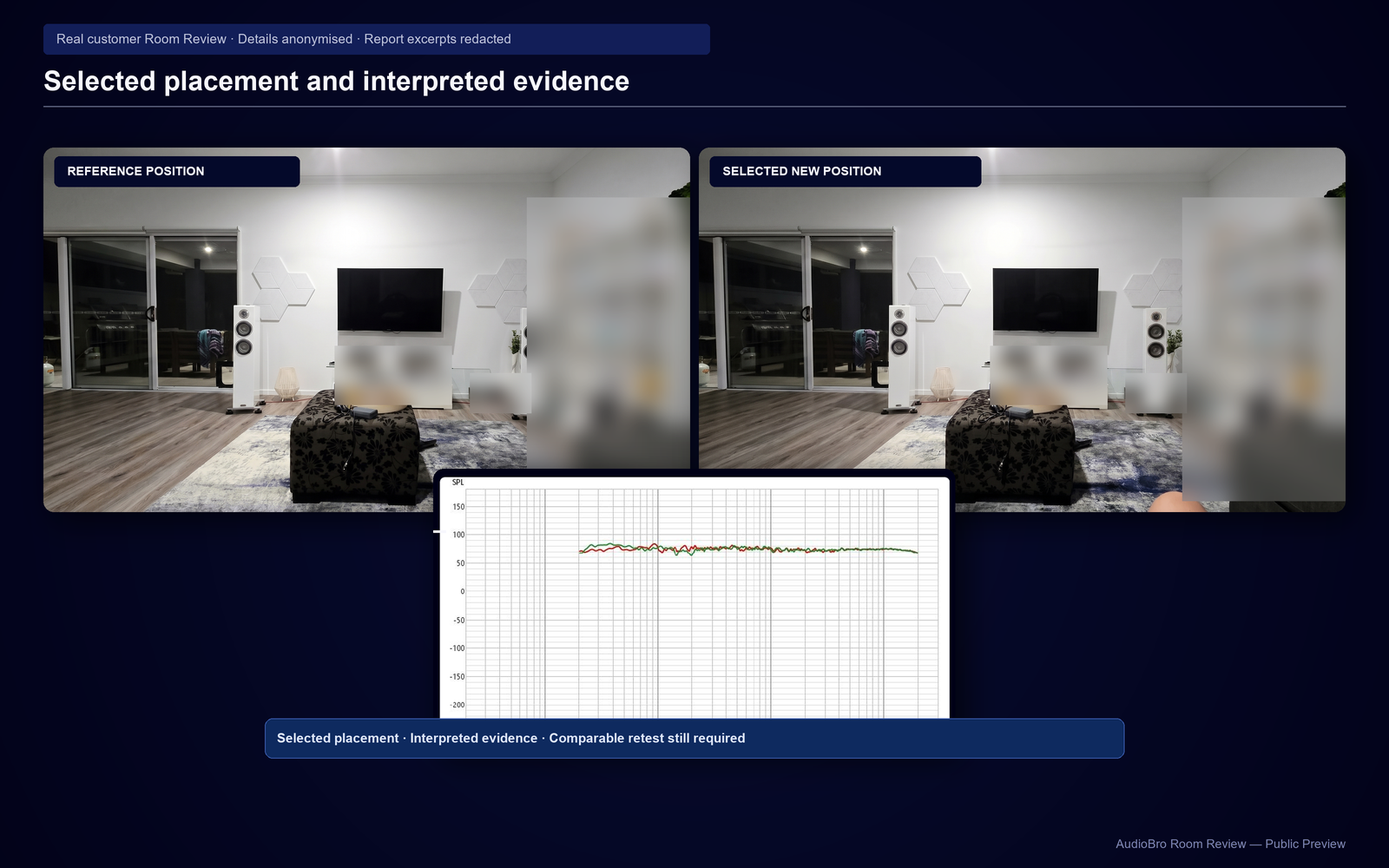
The room measured approximately 7.8 × 7.7 metres and opened into adjoining areas on the left side. The right loudspeaker operated closer to shelving and a reflective boundary. Large glass surfaces, reflective flooring and limited soft coverage added further midrange and high-frequency energy. There was no equivalent left-side first-reflection wall, which meant visually symmetrical loudspeaker placement did not create acoustically symmetrical conditions. AudioBro treated the room as it actually behaved rather than attempting to make both sides look identical.
Investigation & Modelling
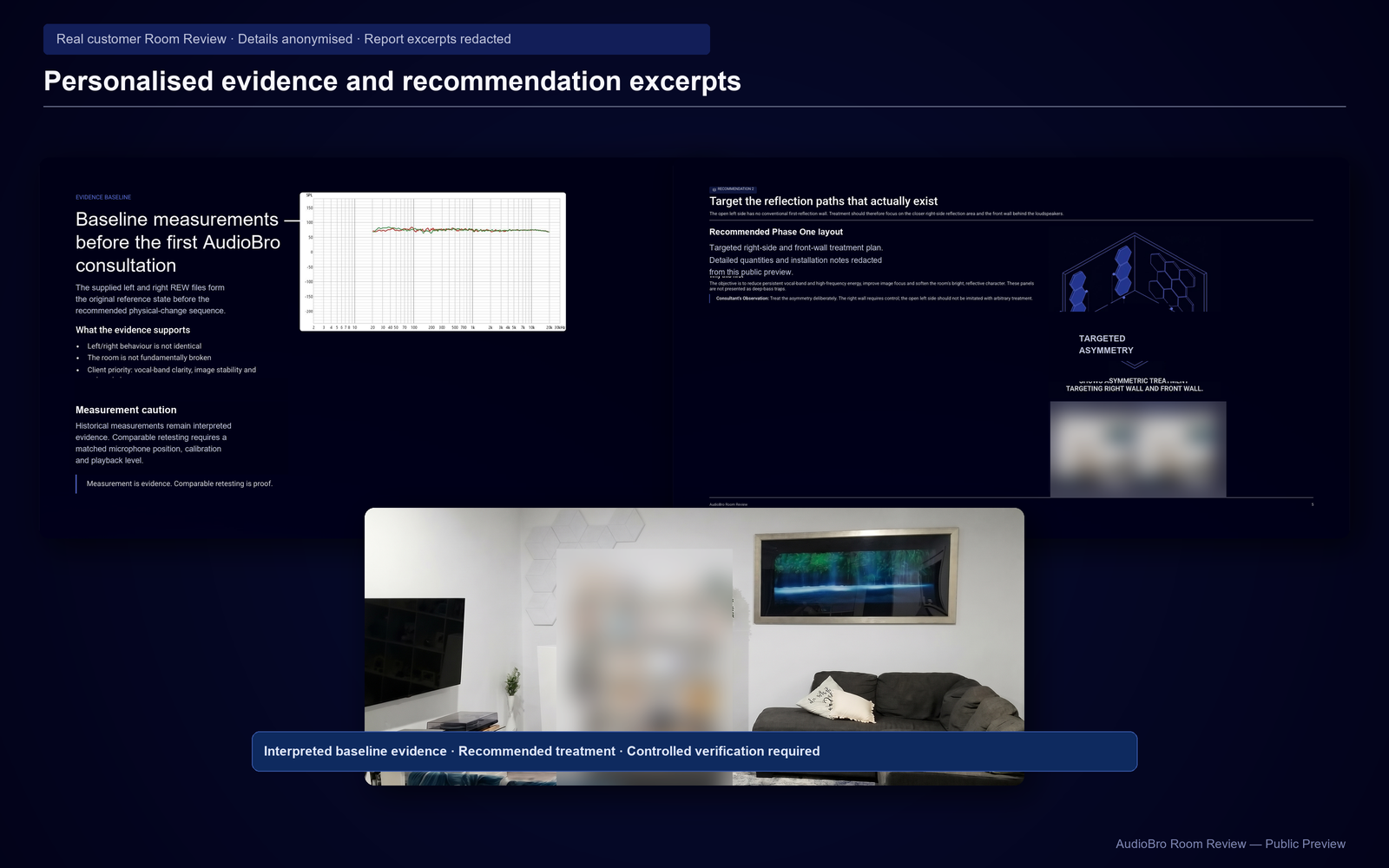
The owner had already captured left and right REW measurements before the first AudioBro consultation, followed by later supporting measurements after the initial physical changes. The evidence showed that the room was not fundamentally broken, but that the two channels did not behave identically. The earlier and later measurements also suggested improved bass behaviour after the physical changes. However, the measurement sessions may not have used completely identical microphone position, orientation, calibration and playback level. For that reason, the historical comparison is supporting evidence rather than a fully controlled laboratory before-and-after result.
Supporting REW evidence indicates improved bass behaviour, but a matched verification sweep remains required.
Implemented Placement Change
AudioBro began with the listening geometry. The listening position was moved forward to approximately 2.9 metres. The loudspeakers were then moved inward and farther from the corners, with particular attention paid to increasing clearance around the more constrained right loudspeaker. Toe-in was tested methodically and refined toward approximately 25 degrees through listening.
- Listening position moved forward to approximately 2.9 metres
- Loudspeakers moved inward and farther from the corners
- Increased clearance around the more constrained right loudspeaker
- Toe-in refined toward approximately 25 degrees through listening
- Physical setup addressed before additional equipment or broader intervention
The owner reported dramatically tighter midrange, clearer vocals, stronger centre-image focus, reduced high-frequency glare and a more controlled and enjoyable musical presentation. The follow-up REW evidence also indicated improved bass behaviour, though the comparison was not captured under fully matched conditions.
Customer-confirmed by listening and supported by REW evidence. Fully controlled verification remains pending.
Targeted Treatment
- Six doubled hexagonal panels around the practical right-side reflection area
- Three doubled hexagonal panels behind the left loudspeaker
- Three doubled hexagonal panels behind the right loudspeaker
- Panels intended to reduce persistent vocal-band and high-frequency energy
- Open left side not treated as though it had a conventional wall
Twenty-four NRC-rated hexagonal pieces were configured into twelve effective doubled panels. Treatment was installed using the recommended layout. The open left side was not treated indiscriminately, and the room was not covered with generic absorption.
Treatment installed. Controlled matched verification sweep remains pending.
Verification Pending
A final controlled REW session remains required using identical microphone position, identical microphone orientation, the same calibration file, matched playback level, separate left and right sweeps, and comparable SPL, phase, impulse, decay and RT60 views. Until that work is complete, the case does not claim a precisely quantified improvement, final decay or RT60 correction, complete room optimisation, or that every audible change was independently measured.
Why This Case Matters
The improvement did not come from replacing the Marten loudspeakers or core electronics. It came from addressing the decisions in the correct order: shorten the listening distance, improve loudspeaker position and boundary clearance, refine toe-in, treat the reflection paths that actually exist, compare the result with measurement, and complete a matched verification sweep. This is the AudioBro approach. The room is assessed first. Physical causes are addressed before unnecessary equipment changes are considered. Measurement then supports the decision rather than replacing it.
Want AudioBro to review it for you?
If your system should sound better than it does and you want room-first guidance before spending more on equipment, AudioBro can review your room.